Newsletter Subscribe
Enter your email address below and subscribe to our newsletter


 ByJohn A
Blockchain offers immutable, tamper-evident records and decentralized access controls to strengthen data integrity in healthcare. It enables verifiable data lineage, auditable trails, and standardized, smart-contract–based consent management. Interoperability improves through interoperable schemas and governance aligned with privacy by design. As regulated access and traceable data sharing scale, the approach supports patient-centric data ownership and system-wide accountability, presenting a cautious pathway toward scalable adoption—yet practical constraints and governance questions persist, warranting careful consideration of the next steps.
Blockchain technology offers substantial enhancements to data security in healthcare by providing immutable, tamper-evident records and decentralized access controls.
The analysis emphasizes data governance frameworks and privacy by design, aligning security with clinical usability.
Mechanisms for auditability, traceability, and role-based permissions support policy goals while preserving patient autonomy and data sovereignty.
Empirical evaluation centers on risk reduction, interoperability, and scalable governance.
Policy implications include standardized governance, verifiable consent trails, and breach accountability.
Data-driven evaluation should assess latency, scalability, and compliance with privacy regulations, ensuring freedom through transparent, enforceable controls.
Blockchain-enabled audits bolster trust, enabling transparent data ownership frameworks and verifiable lineage.
Policy-makers should favor interoperable schemas and permissioned access, advancing patient empowerment while preserving consent integrity, portability, and cross-institutional accountability.
See also: AI in Wind Energy
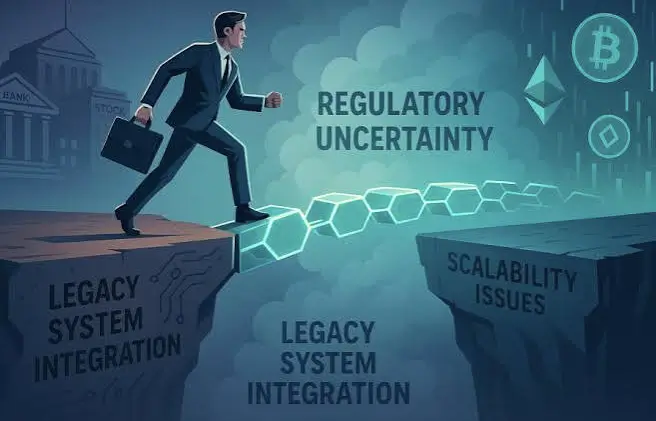
A practical roadmap for healthcare blockchain initiatives requires aligning compliance, scalability, and adoption with existing interoperability and data integrity frameworks.
The plan emphasizes privacy governance and data provenance as core controls, ensuring regulated access, auditable consent, and traceable data lineage.
Policymakers should balance innovation with risk management, promote interoperable standards, and document measurable outcomes to enable scalable, secure, and patient-centered deployment across ecosystems.
In the grand archive of care, blockchain acts as a vigilant custodian, stamping every entry with an unalterable seal. Like a lighthouse guiding ships through foggy seas of data, it clarifies consent, provenance, and policy compliance, ensuring guardianship remains transparent and accountable. As interoperable sails catch standardized winds, health systems chart a course toward scalable, patient-centered sharing. The horizon reveals a governance framework where trust is engineered, not presumed, and data integrity becomes the default.